Grain stored on-farm can now be sold on CGX

Price discovery for grain becoming more challenging - Traded prices are often very different to public cash bids that growers may be referencing.
Furphy of the "private bid" - While it may feel that you're getting a special deal, private bids are often eroding market value and prices.
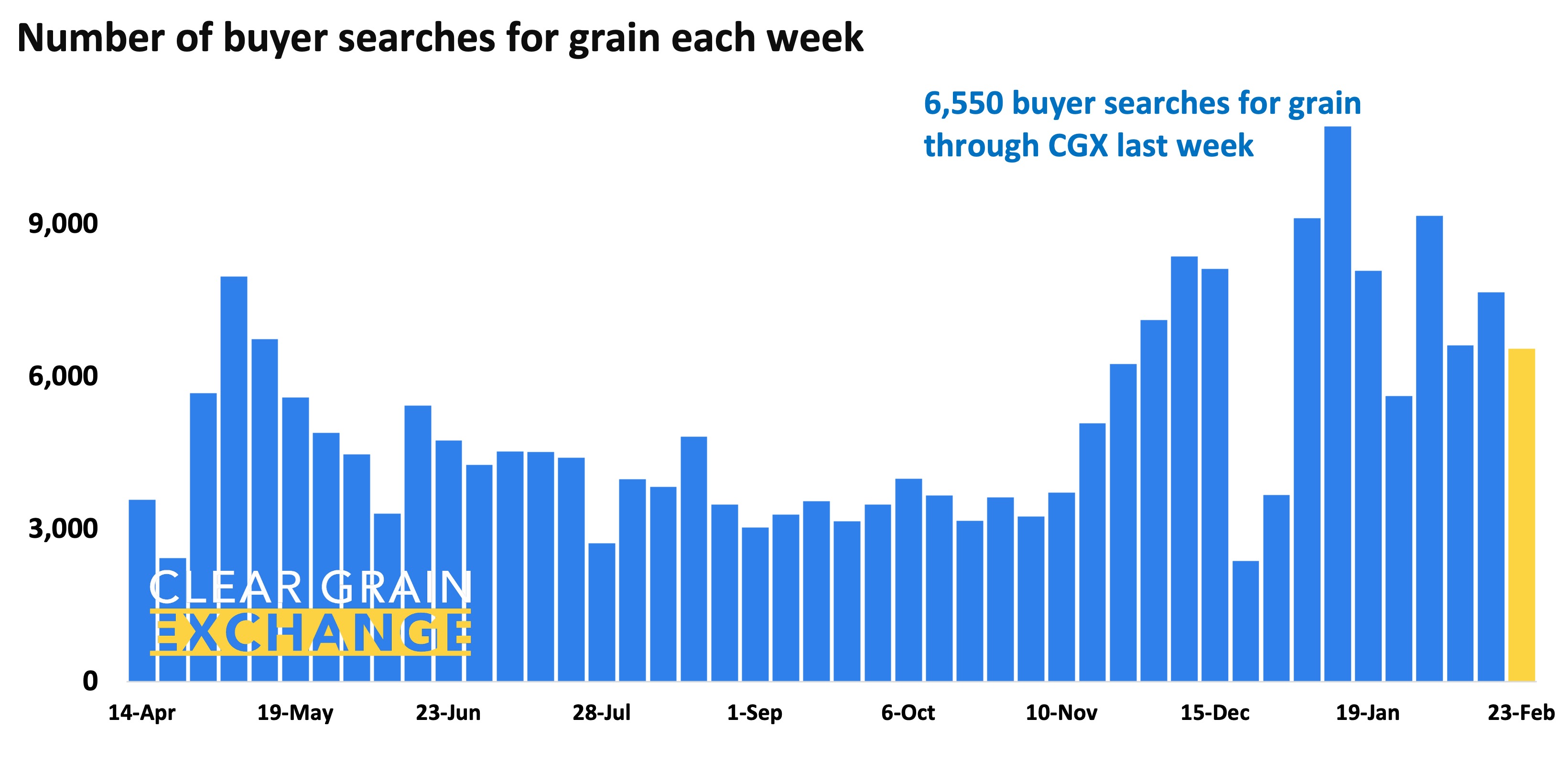
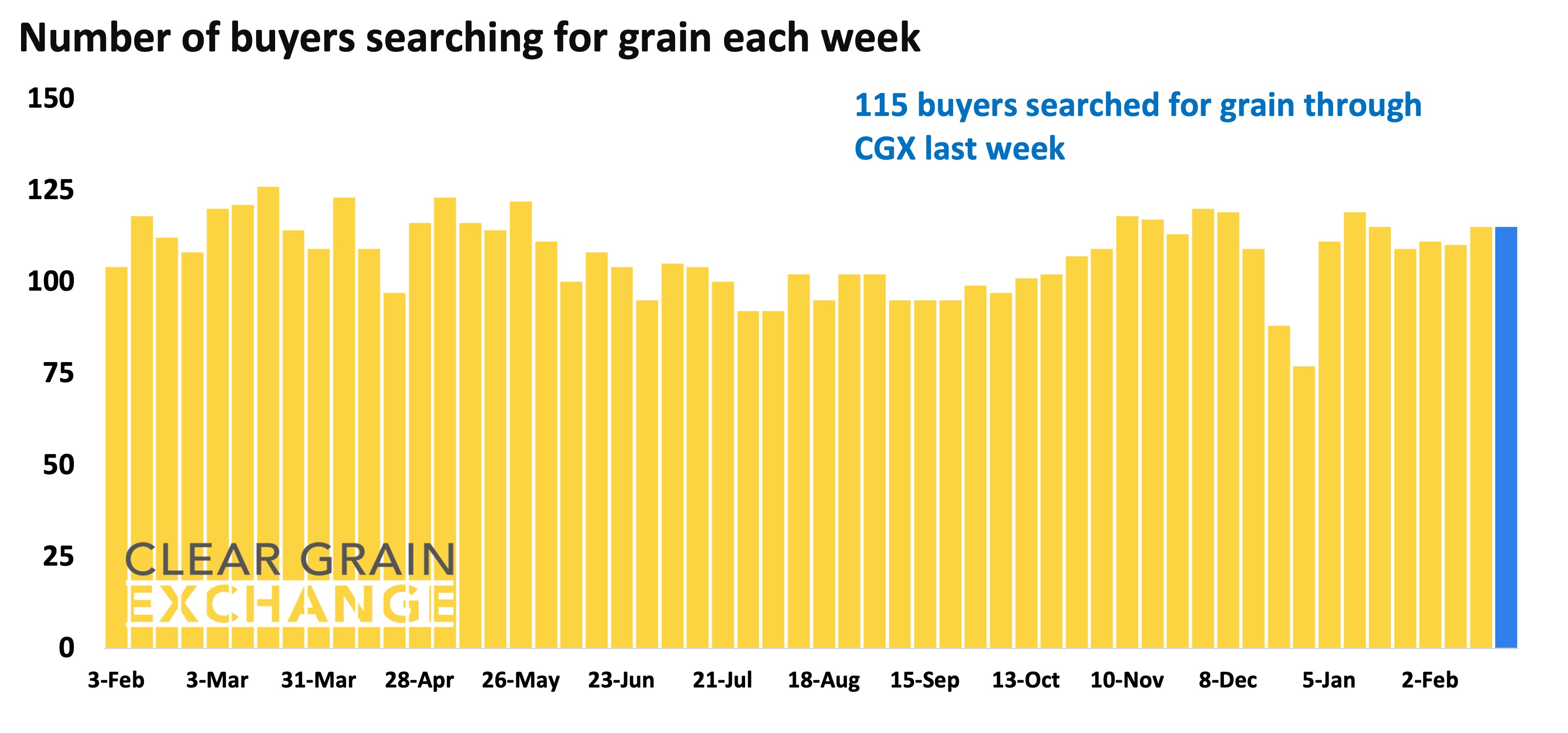
Plenty of buyers searching for grain - 115 buyers made 6,550 searches for grain offered for sale on CGX. 47 buyers were bidding for grain.
When your grain is offered for sale on CGX all buyers can see it and try to purchase it.
Market stats for last week
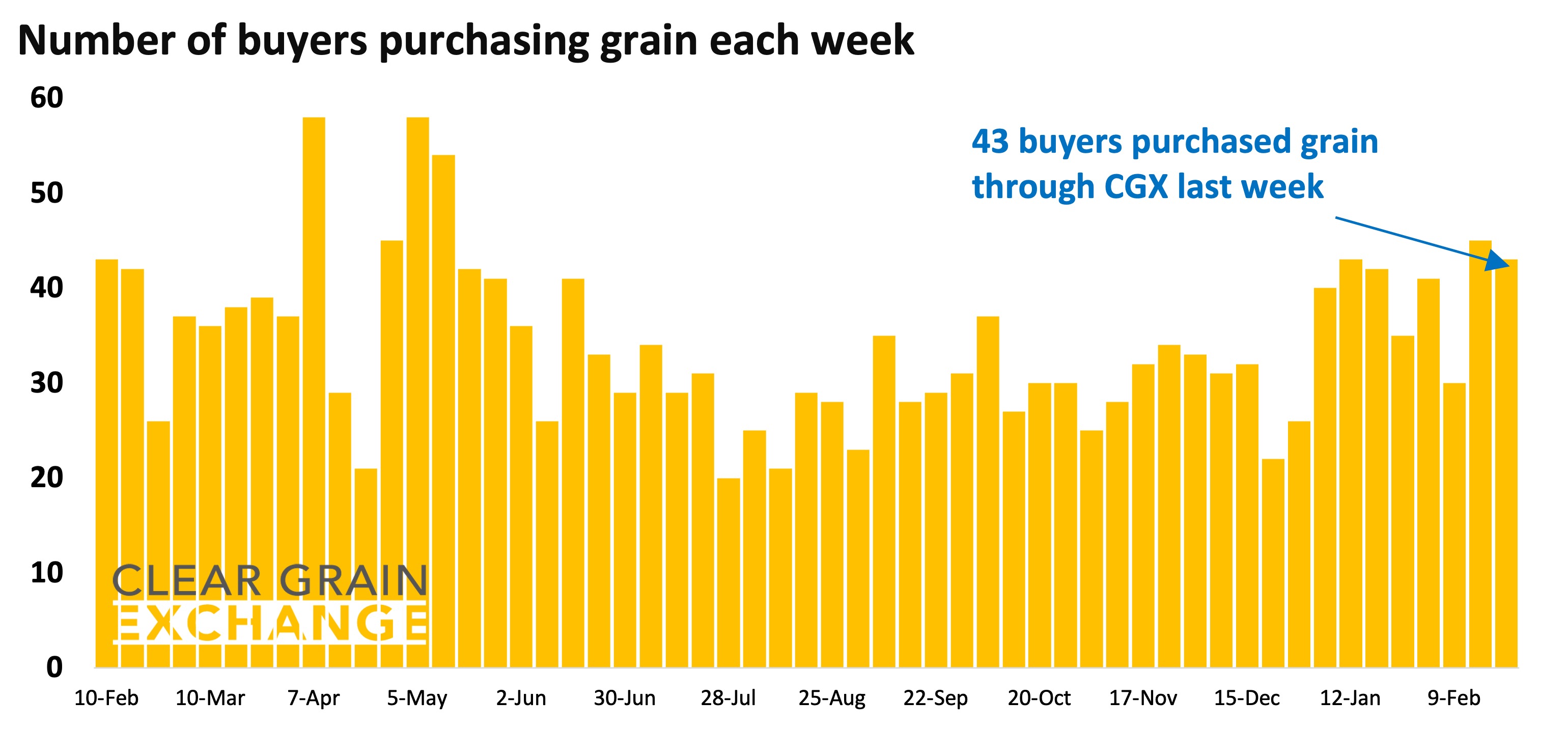
43 buyers purchased grain on CGX - more were searching for grain
2 in QLD
18 in NSW
12 in VIC
11 in SA
12 in WA
159 sellers sold grain through CGX across 187 transactions - more were offering grain for sale
8 agent and/or advisory businesses sold grain on behalf of growers
34 different grades traded + grain stored on-farm with specific attributes
10 commodities - Wheat, barley, canola, chickpeas, faba beans, hay, lentils, lupins, maize, oats
15 port zones traded across QLD, NSW, VIC, SA and WA
Price discovery more challenging
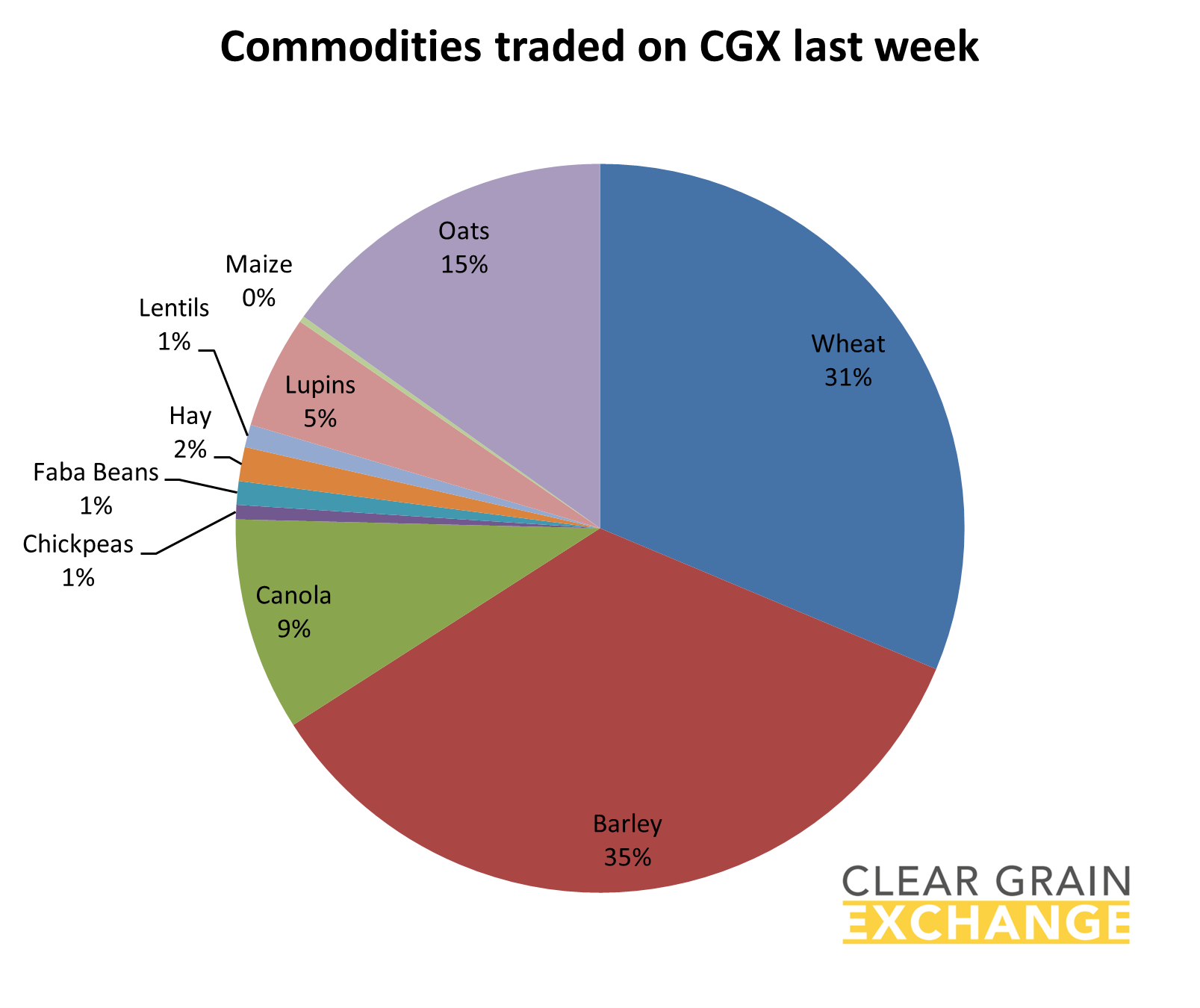
Barley grades made up the highest volume of commodities traded last week at 35%, wheat grades accounted for 31%. Bids for oats improved to trade 15% of all volume. Canola and lupins made up 9% and 5% respectively, and the balance of volume traded through the exchange was chickpeas, faba beans, lentils, hay and maize.
It was difficult to pick trends in demand and prices for particular grains last week, other than the number of buyers searching for grain offered for sale remained relatively high at 115 making 6,550 searches.
This indicates there are plenty of buyers interested in trying to buy grain, and at times we've seen the pricing opportunities for growers somewhat fleeting, where-by buyers come in and bid up to match grower offer prices when they can make it work, and then retreat to the side-lines again.
This is making price discovery for many grains more challenging and we're seeing grain regularly trade at prices above published bids on cash boards. We are also getting reports of growers and agents selling into "private bids" at prices that may be better than published bids, but often below the prices they had it offered for.
Private bids are prices for grain provided by a buyer, to a seller (or their agent), on the proviso that it's not shared, rather it's kept private. While private bids can feel like the seller is getting a "special deal" it is often not the case because it is hidden from the market.
For example, let's say some grain is bid publicly at $300/t, offers are sitting around $315/t and above. A buyer bids a grower (or Agent) directly $308/t on the proviso it's kept private. This means no other buyers or sellers know that it just traded $308/t. Other buyers may be either purchasing or thinking they can purchase grain around $300/t.
If the market knew grain had traded at $308/t, all buyers would know they need to be at or above $308/t, and all sellers would know that their grain is worth $308/t rather than potentially selling into cash bids at $300/t.
There is more value in selling grain on an open exchange at the same price rather than selling into a private bid to create transparency on the value of grain.
There are plenty of buyers for Australian grain. Make it easier for all buyers to try and buy your grain.
Last week some growers appeared more willing sellers ahead of the end of month to avoid warehouse storage charges, particularly through South Australia, which saw some grain being sold into cash bids and/or offers being edited down to match firm bids in the exchange.
Insights to last week's trading activity for warehoused grain (CGX):
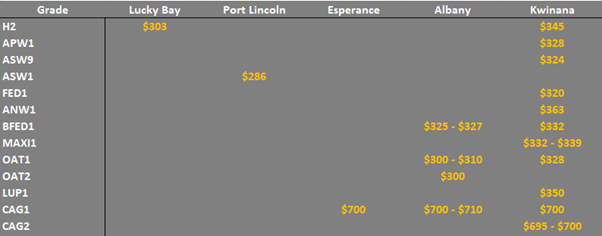
APW1 wheat was trading $333/t track port equivalent Kembla (+$12/t above the best published cash bid at the site), $320/t Melbourne (+$3/t), $316/t Adelaide (+$11/t) and $328/t FIS Kwinana.
There was little price variation to lower grades with ASW1 trading $330/t Kembla (+$12/t), $316/t Adelaide (+$10/t) and ASW9 was trading $324/t Kwinana.
AGP1 was trading $332/t Newcastle (+$5/t) and FED1 wheat was trading $320/t Kwinana.
Higher protein milling wheats are getting more value than APW1 in the west but price differences in other parts of the country have narrowed significantly.
Feed barley was trading $309/t across Newcastle (+$6/t) and Kembla (+$5/t), $302/t Geelong (+$1/t), $295/t Adelaide (+$3/t) and $332/t Kwinana (+$2/t).
Some modest premiums were paid for malt in some cases but the majority is trading feed values.
OAT1 were trading $328/t (+$15/t) in the west with OAT2 at a $10/t discount (+$20/t above best published bid).
GM canola was trading $710/t in the west + oil bonifications (+$24/t) with demand across Kwinana, Albany and Esperance.
Pulse markets continue to trade with lentils and faba beans trading $661/t (+$5/t) and $450/t respectively in Adelaide. Chickpeas were $607/t Newcastle (+$5/t) and lupins continue to trade at $350/t in Kwinana (+5/t).
Insights to last week's trading activity for grain stored on-farm (igrainX):
Demand for feed barley was wide spread with feed trading $325/t ex-farm in the Brisbane port zone, $310/t in the Newcastle zone, $305/t in Kembla, $295/t in Portland, and $290/t in the Geelong zone.
Stock feed wheat traded $337/t ex-farm in Brisbane port zone.
PRIME maize traded $495/t ex-farm in the Melbourne zone.
Canola was trading Free-on-Truck ex storage in the Portland zone for $645/t.
Angustifolius lupins traded $600/t ex-farm in Melbourne, and Albus lupins traded $570/t ex-farm in Newcastle.
Hay was also being transacted off-screen using the Clear Settle services to manage counterparty risk.
Note for growers storing grain on-farm that are unsure of what grade it would be classified as, they have the ability to describe the quality of the grain that they know. The more detail of the grain provided, the more interest it appears to attract as buyers can work with the quality that's known.
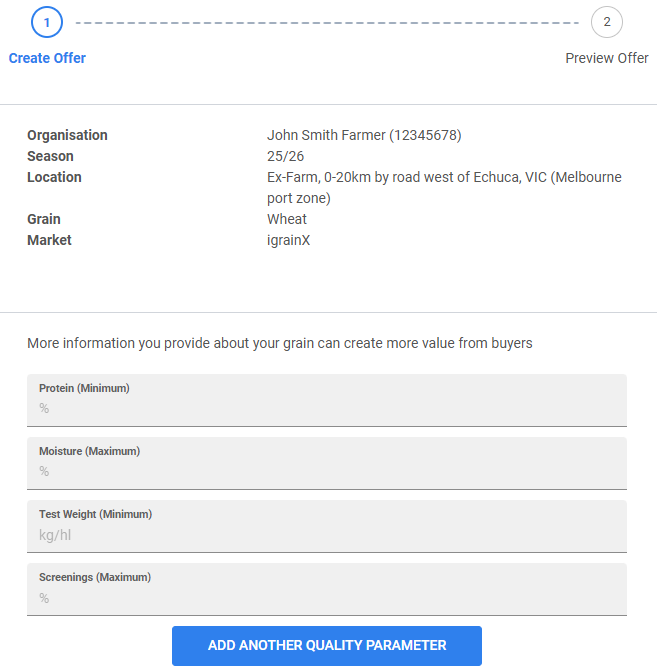
Growers storing grain on-farm can describe the quality of the grain they're storing when offering it for sale to help maximise it's value from buyers.
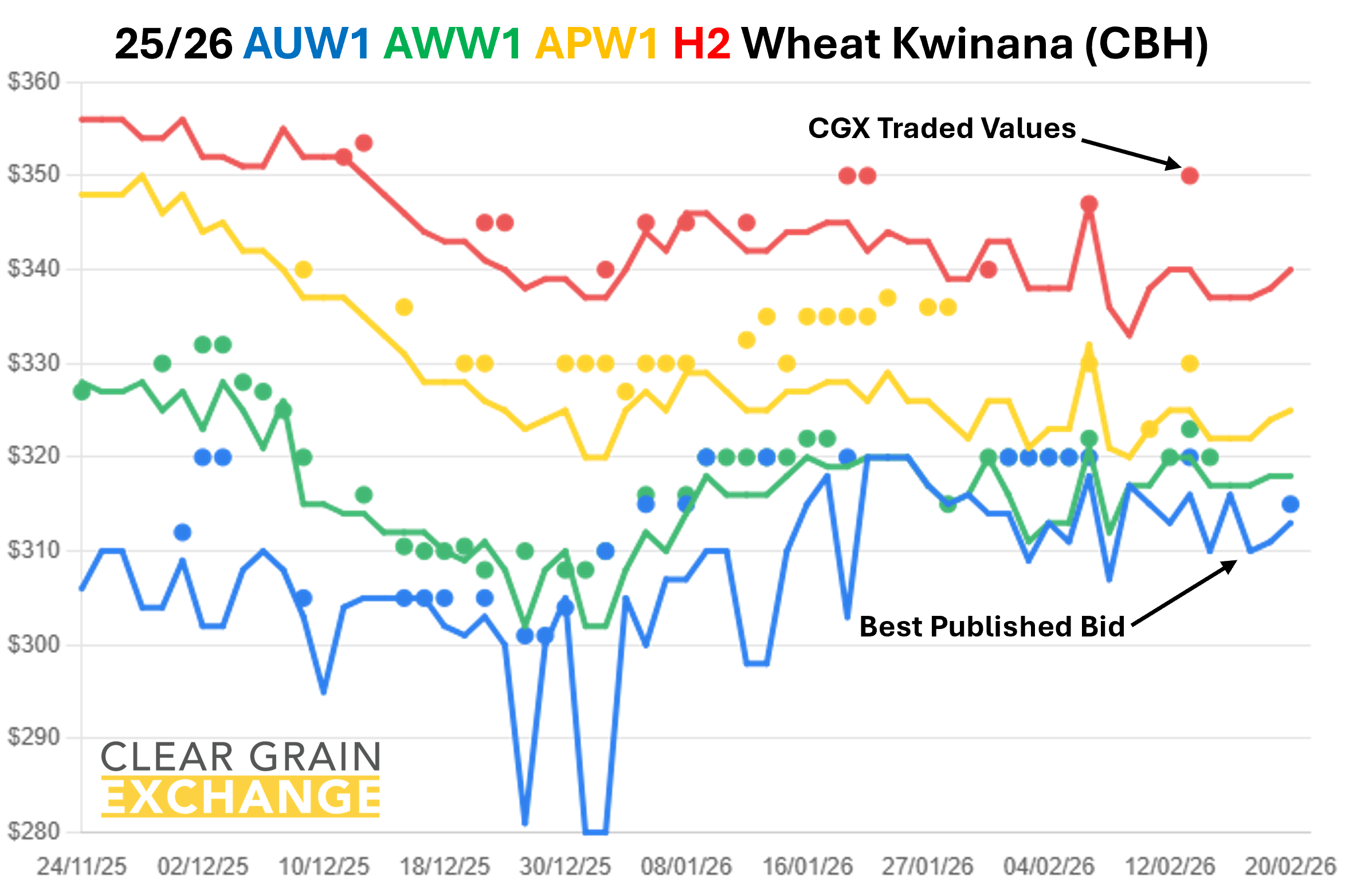
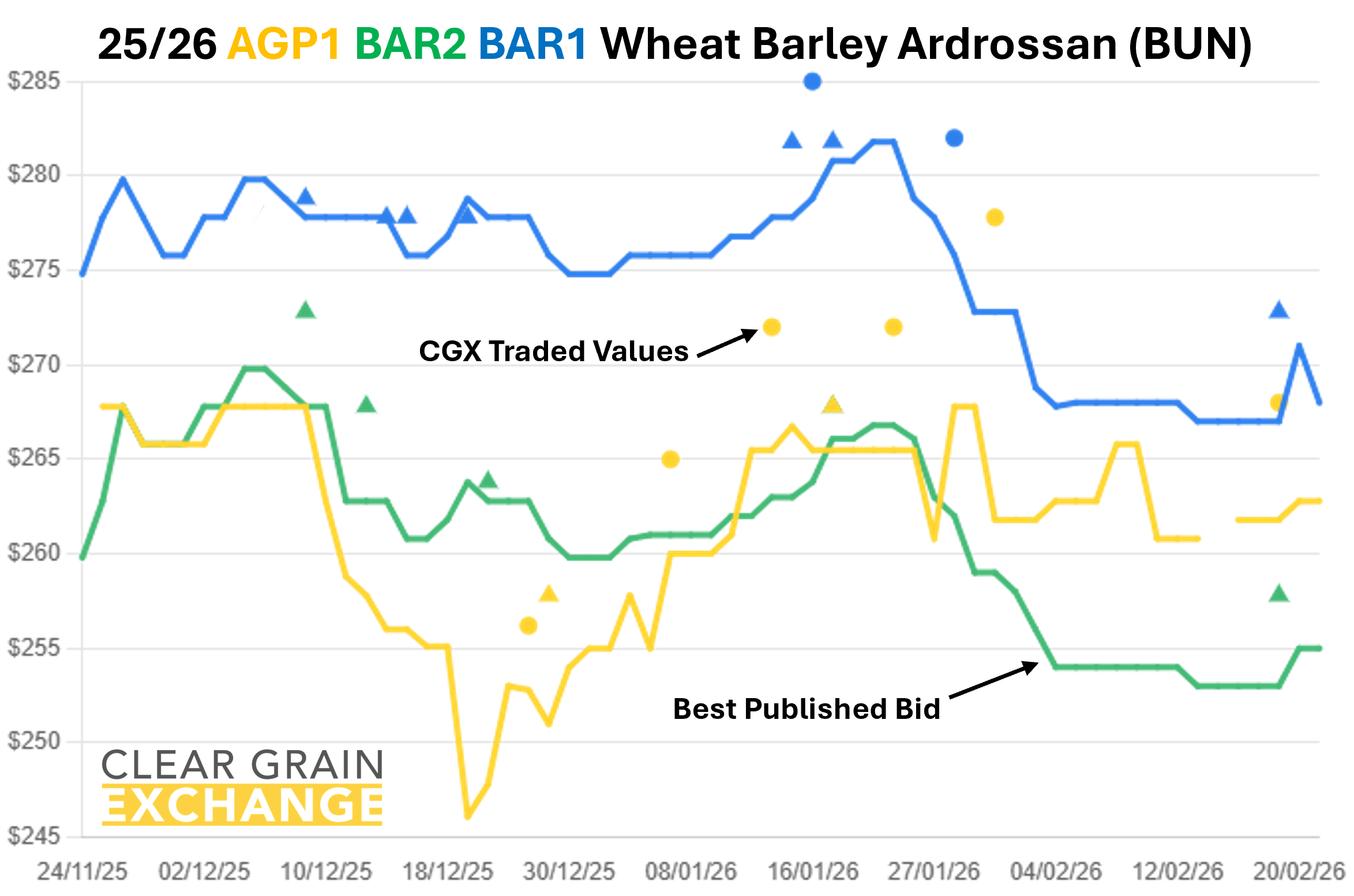
Growers are impacting the price of Australian grain by offering grain for sale and leading the direction of all bids.
Regardless of where prices are being bid, growers and their agents can offer grain for sale at prices they're targeting to sell. If you have a sell price in mind, it's time to put it out there.
Don’t just offer grain for sale when you're a seller, offer grain for sale when you know prices you'd sell for. More growers are doing this and they're impacting prices.
There’s no downside in offering your grain for sale, only upside – why wouldn’t you offer all of your grain for sale at prices you're happy with? Be proactive, take control, and offer.
The prices traded through the exchange at a port track (eastern states) or FIS (in WA) level are provided below, but if you're reading this email you will have your own CGX account so login and use it to see what's trading, what's offered, and what's being bid at sites to help you determine the value of grain in your area.
Please call the CGX team anytime for assistance on 1800 000 410.
The tables below provide a summary of traded prices on CGX last week
Note: GTA location differentials are used to convert prices to a port equivalent price, actual freight rates can differ particularly in the eastern states. You can offer any grade for sale to create demand.
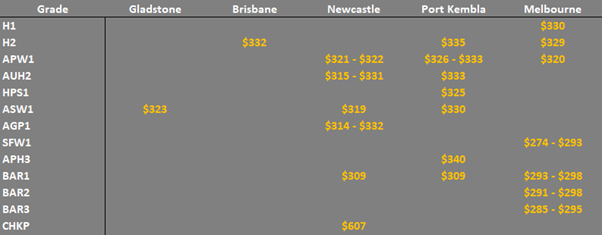
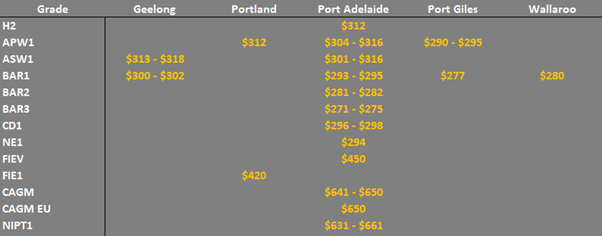
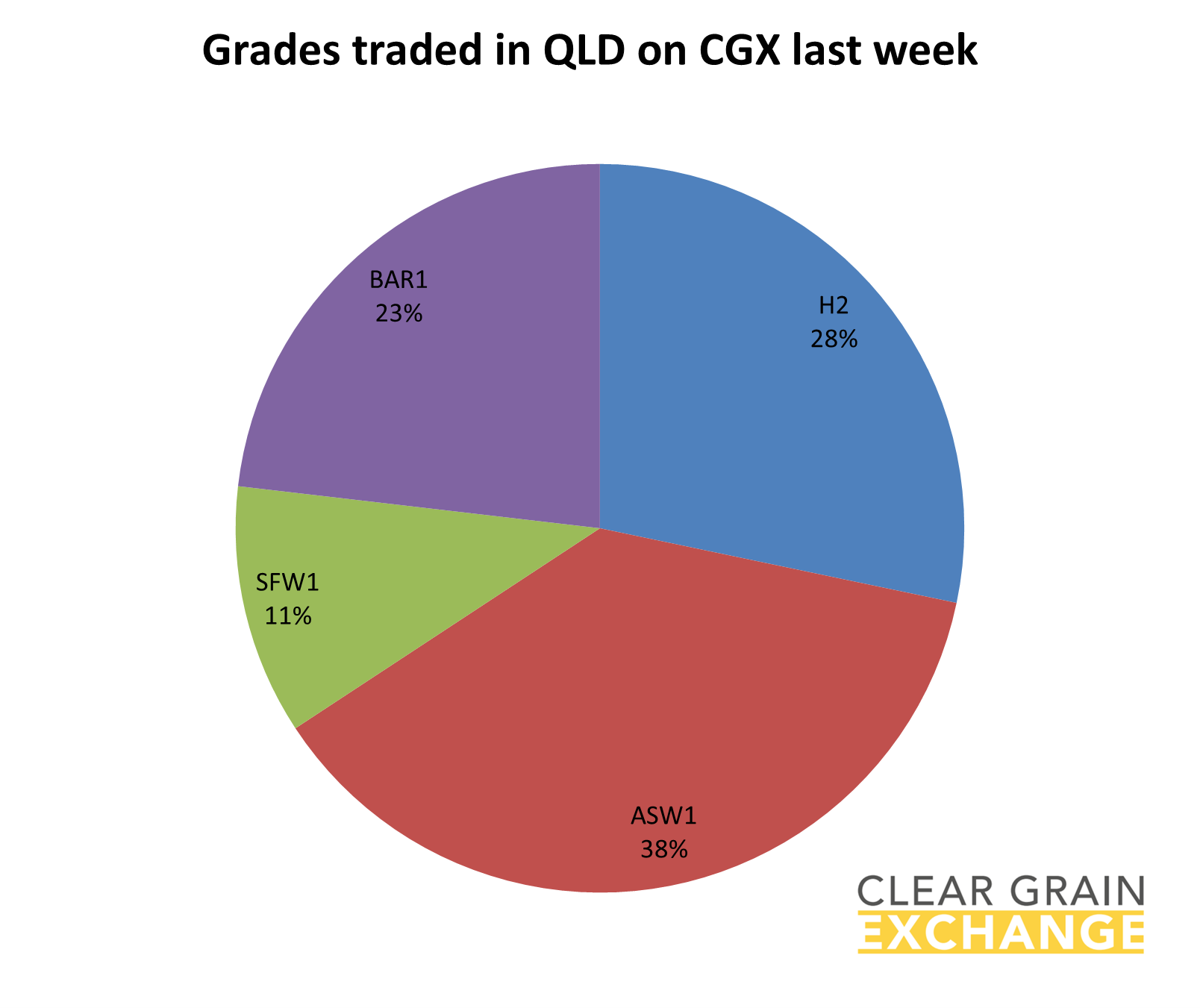
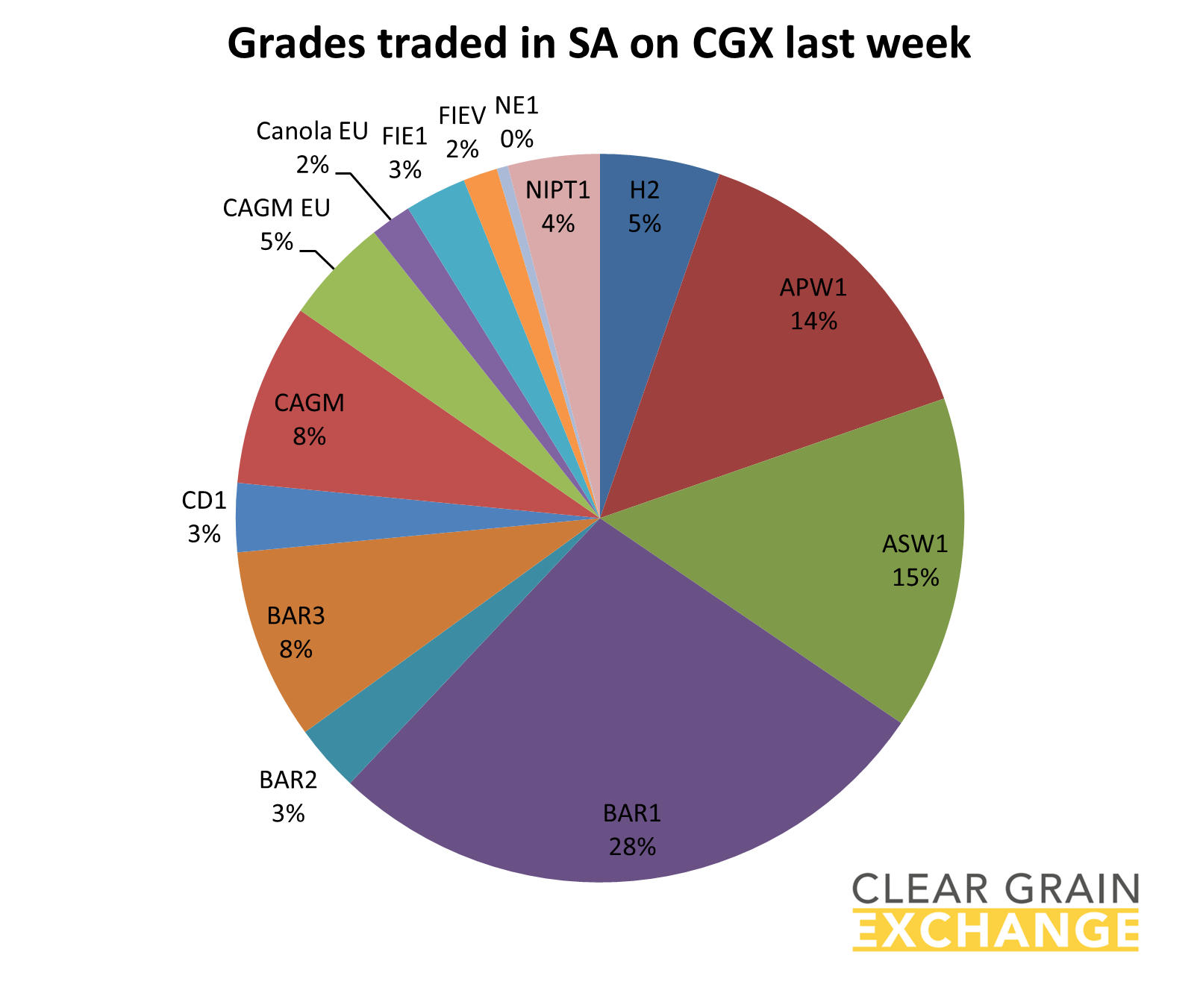
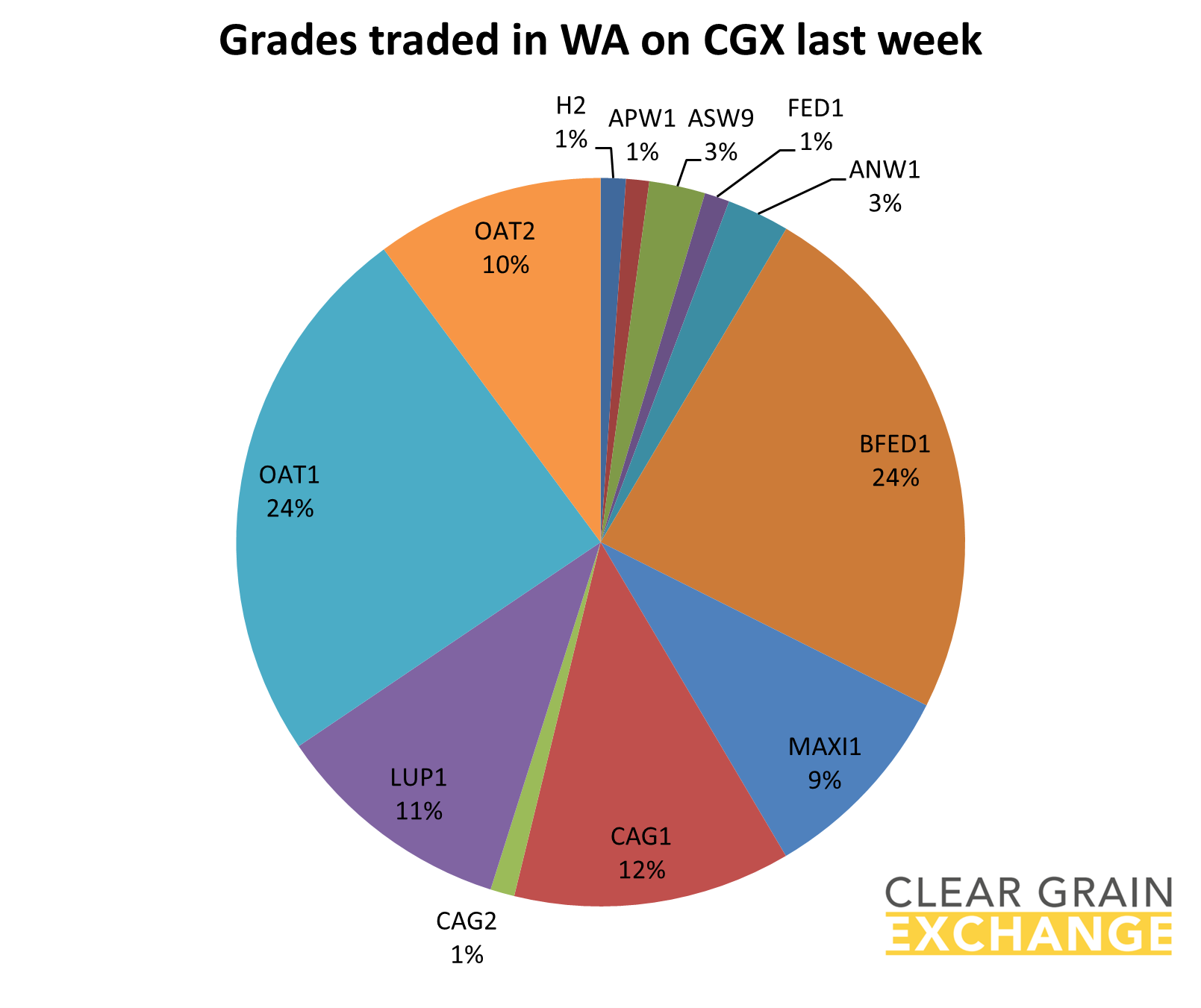
The charts below provide a summary of grain traded last week
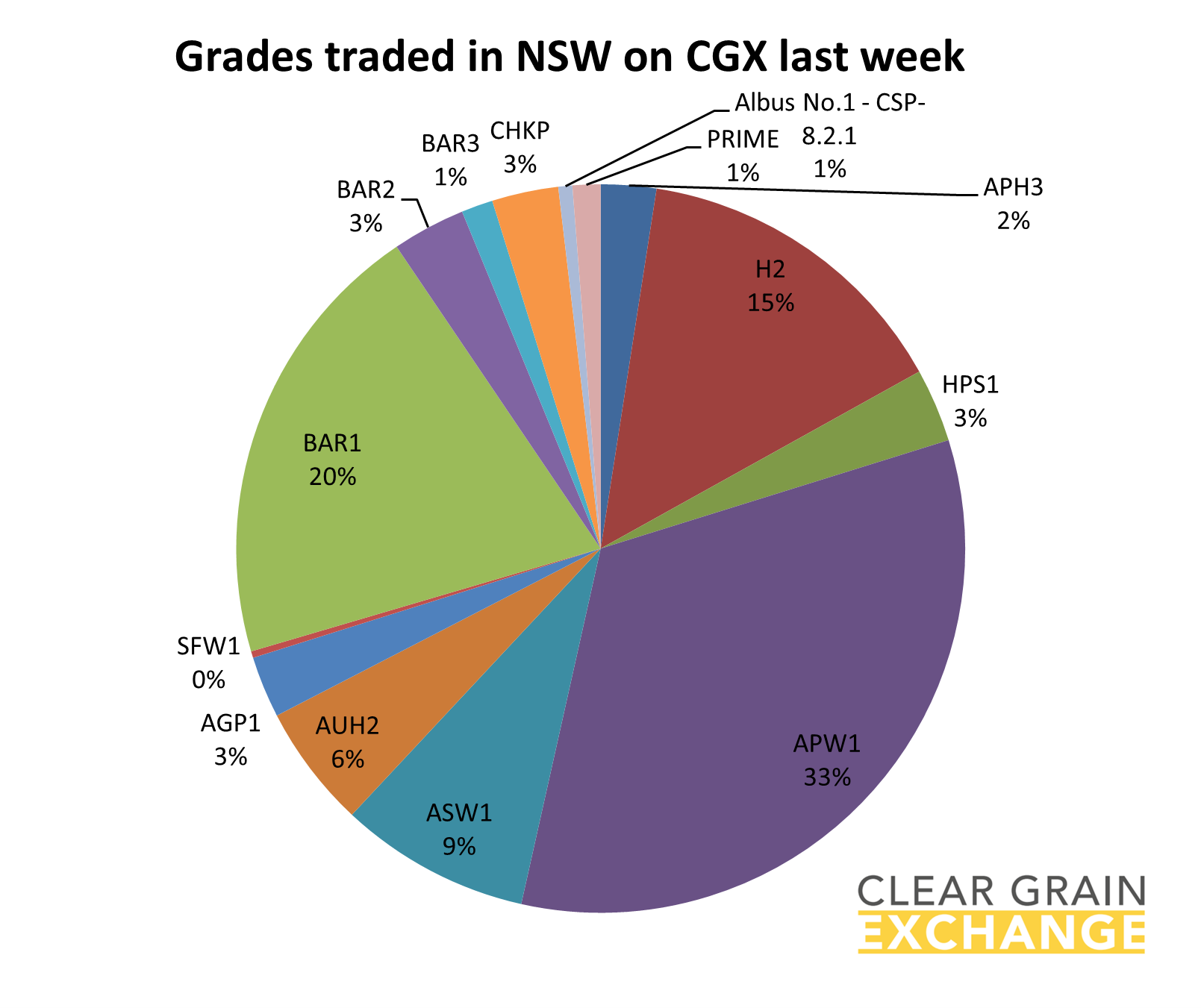
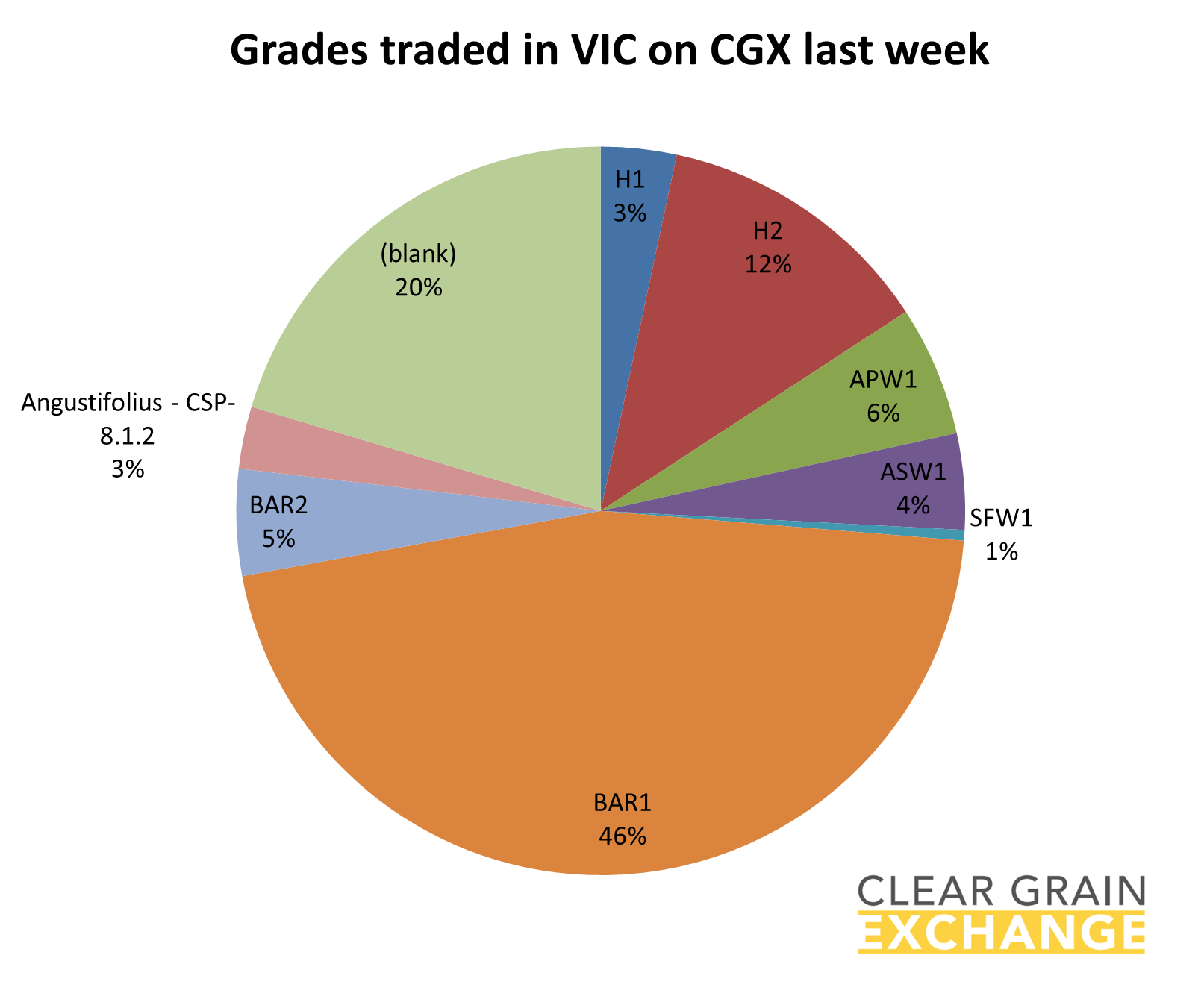
CGX now own and operate the igrainx market for grain stored on-farm

If you have any queries, we're always here to help!
Please give us a call or email if you have any questions.
Call 1800 000 410 or Email support@cgx.com.au